
Breakthrough T1D Visits Sinocare Diabetes Foundation to Explore New Pathways for Type 1 Diabetes Research Collaboration in China
Recently, a delegation from Breakthrough T1D, a global leading organization dedicated to research and advocacy for type 1 diabetes (T1D)—formerly known as JDRF (Juvenile Diabetes Research Foundation)—visited the Hunan Sinocare Diabetes Foundation (hereinafter referred to as the “Sinocare Foundation”). The two sides engaged in in-depth discussions on their respective achievements in diabetes-related public welfare initiatives and exchanged views on future collaboration in China, including advancing T1D research, accelerating the translation of innovative therapies, and strengthening patient support systems. The dialogue aimed to inject new momentum into cross-border collaboration within the global diabetes community.
Dr. Aaron J. Kowalski (fourth from right), CEO of Breakthrough T1D, exchanges insights on public welfare practices with members of Sinocare Foundation
As a chronic disease that transcends national borders, type 1 diabetes poses long-term challenges to patients and their families. Medical research indicates that T1D is a metabolic disorder caused by the destruction of pancreatic β-cells, leading to absolute insulin deficiency. It is commonly characterized by the classic symptoms of polydipsia, polyphagia, polyuria, and weight loss, and most frequently affects children and adolescents. Patients require lifelong insulin therapy and face ongoing risks of severe complications, including kidney failure, blindness, and neuropathy. Globally, approximately 9 million people are currently living with type 1 diabetes, including 1.45 million patients in the United States. In China, the T1D population likewise requires greater attention and support. For any family, a diagnosis of type 1 diabetes necessitates comprehensive lifestyle adjustments and sustained efforts to manage the disease.
Both organizations participating in this exchange have deep expertise and notable achievements in the field of T1D public welfare. Breakthrough T1D was founded in 1970 by parents of children with type 1 diabetes and officially renamed in 2024 to reflect its commitment to serving people of all ages living with T1D. Guided by the vision of “a world without type 1 diabetes (Type None)”, the organization focuses on curing T1D and improving quality of life for those affected. Its work includes supporting research to restore β-cell function, advancing cell replacement therapies, and accelerating the clinical translation of innovative resources and technologies to reduce the burden of disease.
Over more than five decades, Breakthrough T1D has driven numerous breakthroughs in T1D research. Its long-standing Special Diabetes Program (SDP)—supported for over 25 years—receives more than USD 150 million in federal funding annually and, in collaboration with the U.S. National Institutes of Health (NIH), has delivered significant progress in areas such as artificial pancreas systems and diabetic eye disease treatment. The organization’s Accelerating Cell Therapies (ACT) Program further promotes cross-disciplinary collaboration to advance cell-based therapies as effective treatments for T1D. Today, Breakthrough T1D operates major international branches in regions including Canada, Australia, and Israel, with a global network of staff and volunteers, serving as a key connector in worldwide T1D research collaboration.
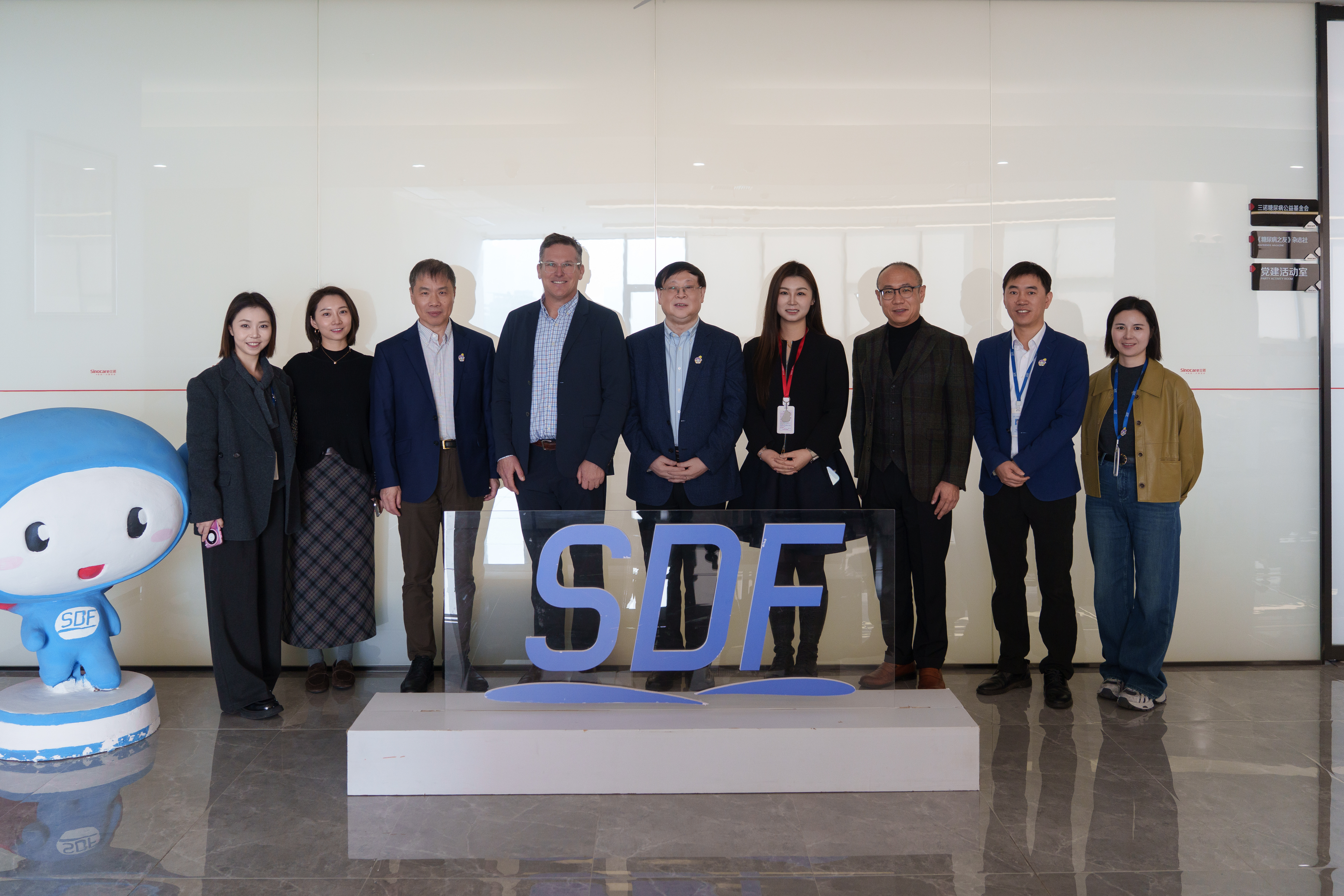
Group photo of representatives from both organizations
The Sinocare Foundation is the first diabetes-focused public welfare foundation in mainland China. It was jointly initiated in January 2019 by Mr. Li Shaobo, Chairman of Sinocare Inc.; Dr. Cai Xiaohua, Chief Scientist; Ms. Li Xinyi, Vice Chairman; and Sinocare Inc. itself. Guided by the mission of “helping people with diabetes live happy and healthy lives through education and innovation,” the Foundation is a 4A-rated non-public fundraising foundation dedicated exclusively to long-term diabetes-related public welfare initiatives. Since its establishment, the Sinocare Foundation has built a comprehensive public welfare service system spanning patients and families, healthcare professionals, and the general public.
For families affected by type 1 diabetes, the Foundation launched the “T1D Child Care Program,” providing “New Diagnosis Care Kit,” subsidies for daily supplies and expenses, and organizing “T1D Family Camp” to help families cope with early-stage diagnosis challenges and financial pressure. The program was shortlisted for the 12th China Charity Award in 2022.
For healthcare professionals, the Foundation operates the “Diabetes Care Professional Training” and the “Type 1 Diabetes Educator Program,” partnering with leading domestic and international medical institutions to strengthen grassroots clinical care and research capabilities, and to cultivate specialized diabetes education and treatment professionals.
For the wider public, initiatives such as the “Campus Diabetes Awareness Tour” and multi-channel science communication campaigns have improved public awareness of T1D. Notably, the Foundation produced China’s first animated science education series on type 1 diabetes, Sweet Diary, which has received multiple national science communication awards.
In addition, the Sinocare Foundation collaborates with pharmacy chains nationwide to conduct diabetes screening programs. Over the past seven years, it has provided blood glucose testing services to 110 million people. Owing to its standardized governance and impactful public welfare outcomes, the Foundation has received a perfect score on the China Foundation Transparency Index (FTI) for consecutive years since 2021 and has been honored with awards including the Outstanding Contribution to Education Award from Central South University and the Annual Health Public Welfare Project Award at the International Health Industry Summit.
During the exchange, Dr. Aaron J. Kowalski, CEO of Breakthrough T1D, spoke highly of the Sinocare Foundation’s public welfare practices. Notably, Dr. Kowalski himself has lived with type 1 diabetes for more than 40 years. As both a strong advocate for and a personal user of artificial pancreas systems, he brings deep empathy and firsthand understanding of the challenges faced by people with diabetes.
Dr. Kowalski remarked that, as a public welfare organization initiated by a Chinese enterprise, the Sinocare Foundation has accurately identified the core needs of the T1D community and built a comprehensive support system encompassing patient assistance, talent development, and public education. Its practices—particularly in supporting economically disadvantaged patients and building peer support networks—not only provide tangible benefits to people with T1D in China, but also offer a highly valuable “China model” for the global diabetes public welfare community.
“This locally grounded, full-chain public welfare approach demonstrates the responsibility and commitment of Chinese organizations in chronic disease prevention and control, and highlights the tremendous potential of global collaboration in the fight against type 1 diabetes,” said Dr. Kowalski.

Dr. Aaron J. Kowalski and his delegation visit Orange Isle, experiencing the cultural heritage of Changsha
This international exchange has established a strong foundation for deeper collaboration. Looking ahead, both parties will take this meeting as a starting point to further advance cooperation in T1D research, exploring concrete pathways such as joint research projects, sharing international research resources, and promoting the localization and application of innovative therapies in China. At the same time, they will strengthen mutual learning in patient support and public education.
Both sides agree that preventing and managing type 1 diabetes requires coordinated global efforts. Through this collaboration, they aim to integrate China’s local public welfare experience with cutting-edge global research resources, inject new momentum into improving T1D diagnosis and management in China, benefit more patients through scientific progress and compassionate care, and jointly move toward the vision of “a world without type 1 diabetes.”