
Three-Stage AGP:A Great Assistant for Personalized Blood Glucose Control
Medical History and Basic Information
Chief Complaint:
A 43-year-old female patient was admitted due to "dry mouth, polydipsia, polyuria for 4 years, and poor blood glucose control for 3 months".
Present History:
Diagnosis of Diabetes and Initial Treatment: In February 2021, the patient developed symptoms of dry mouth, polydipsia, and polyuria, with a weight loss of 6kg within 3 months. No numbness of hands and feet or blurred vision was reported. Elevated venous blood glucose (specific value unknown) was detected in another hospital, and she was diagnosed with "Type 2 Diabetes Mellitus". Subsequently, she received hypoglycemic treatment with regimens such as "Metformin 0.5g orally twice daily" and "Metformin combined with Dapagliflozin".
First Hospitalization: In February 2024, due to poor blood glucose control, the patient was hospitalized in our department. Nerve conduction examination revealed "diabetic peripheral neuropathy", and she was treated with "Mecobalamin" and "Kallidinogenase". Meanwhile, the hypoglycemic regimen was adjusted to "Metformin Hydrochloride Tablets 0.5g orally three times daily, Empagliflozin Tablets 10mg orally once daily, Acarbose Tablets 50mg orally three times daily" before discharge. Blood glucose control was good in the early stage after discharge.
Recent Blood Glucose Status and Reason for Re-hospitalization: In November 2024, the patient self-monitored fasting capillary blood glucose at 8.2mmol/L and 2-hour postprandial capillary blood glucose at 16.3mmol/L. She visited the outpatient clinic of our department and underwent "Continuous Glucose Monitoring (CGM)". The monitoring report showed: Mean Glucose (MG) 9.8mmol/L, Glucose Management Indicator (GMI) 7.5%, Time in Range (TIR) 68.3%, Time Above Range (TAR) 31.7%, Time Below Range (TBR) 0%. Based on the monitoring results, the patient's blood glucose level was excessively high, and hospitalization was recommended. She was admitted to our department on March 2, 2025, with the diagnosis of "Type 2 Diabetes Mellitus with Diabetic Peripheral Neuropathy".
Living Habits and General Condition: In the past six months, the patient's dietary control was unstable, and she occasionally consumed hot pot and sugary drinks. Sleep quality was poor, stool and urine were basically normal, and there was no significant weight change.
Physical Examination:
Pulse: 85 beats/min, Blood Pressure: 133/93mmHg, Height: 155cm, Weight: 55kg, Body Mass Index (BMI): 22.89kg/m²; no other abnormal findings.
Auxiliary Examinations:
Laboratory Examinations
- - Fasting blood glucose: 8.76 mmol/L, HbA1c: 7.2%.
- - Blood lipids: Total Cholesterol (TC): 4.52 mmol/L, Triglycerides (TG): 2.49 mmol/L, High-Density Lipoprotein Cholesterol (HDL-C): 0.94 mmol/L, Low-Density Lipoprotein Cholesterol (LDL-C): 3.33 mmol/L.
Imaging Examinations
- - Carotid Artery Ultrasound: Thickening of the intima-media of the right subclavian artery; no obvious abnormalities in the displayed segments of bilateral common carotid arteries, internal carotid arteries, external carotid arteries, and vertebral arteries.
- - Lower Extremity Vascular Ultrasound: Medial calcification of the intima-media of bilateral dorsal pedal arteries; no obvious abnormalities in the displayed segments of bilateral common femoral arteries, deep femoral arteries, superficial femoral arteries, common femoral veins, proximal great saphenous veins, popliteal arteries, popliteal veins, and calf muscular venous plexus.
- - Abdominal Ultrasound: Fatty liver; rough and thickened gallbladder wall; no obvious abnormalities in the pancreas, spleen, and bilateral kidneys.
Other Examinations:
- - Bone Mineral Density: T-score 0.5, Z-score 0.7, indicating normal bone mass.
- - Sensory Vibration Threshold: Left toe VPT 4.8V, right toe VPT 6.0V. The patient had good deep sensation, low risk of neuropathic ulcers, and no neuropathy (Grade 0-1: Subclinical Neuropathy).
- - Ankle-Brachial Index (ABI): Left lower extremity 1.15, right lower extremity 1.13; both lower extremity blood vessels were normal.
- - Nerve Conduction Velocity (NCV): Decreased sensory conduction velocity but normal amplitude of bilateral median nerves; normal motor and sensory conduction velocities and amplitudes of other examined nerves.
Admission Diagnosis:
1. Type 2 Diabetes Mellitus(T2DM) (with Diabetic Peripheral Neuropathy); 2. Dyslipidemia; 3. Fatty Liver.
Treatment Regimen Based on CGM Interpretation
1. Problem Identification
The patient had undergone CGM 3 months before admission. After admission, the Ambulatory Glucose Profile (AGP) report was first analyzed.
- Core Indicators of Out-of-Hospital Continuous Glucose Monitoring
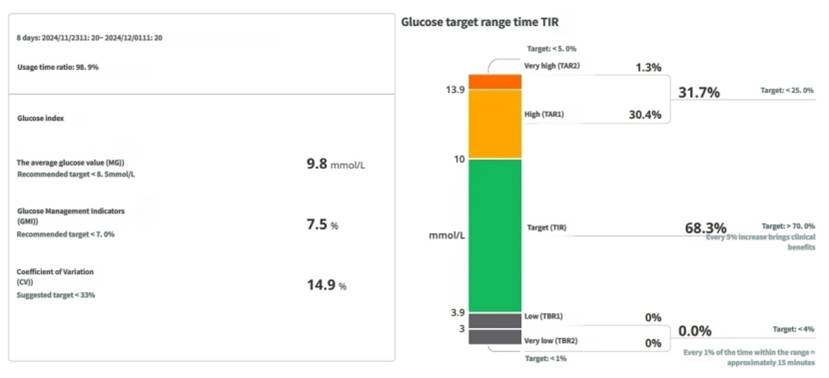
The report showed that the monitoring time accounted for 98.9%, with good data adequacy. The patient's blood glucose coefficient of variation (CV) met the standard, but TIR was not up to standard, TAR was excessively high, and no hypoglycemia was found (TBR 0%). The patient's blood glucose control was poor and overall high.
- Analysis of Out-of-Hospital AGP Chart
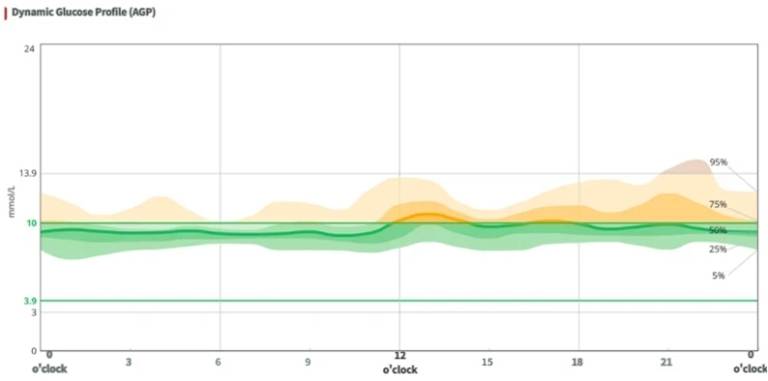
The median line of the AGP chart was at a high level, the Interquartile Range (IQR) mostly exceeded the target range in the afternoon, and the Interdecile Range (IVR) had a large fluctuation range, especially in the evening. These findings suggested that most of the reasons for the patient's poor blood glucose control were attributed to lifestyle. Lifestyle adjustments could be prioritized; if lifestyle improvements were not effective, further adjustments to the medication regimen would be needed.
- Daily Blood Glucose Fluctuation Chart Out of Hospital
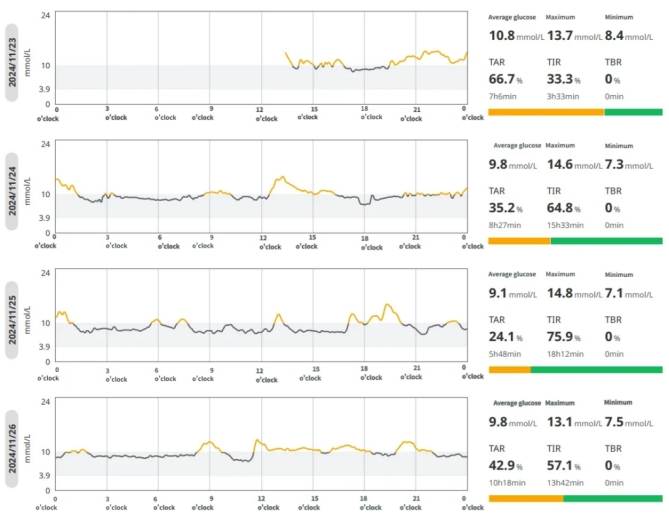
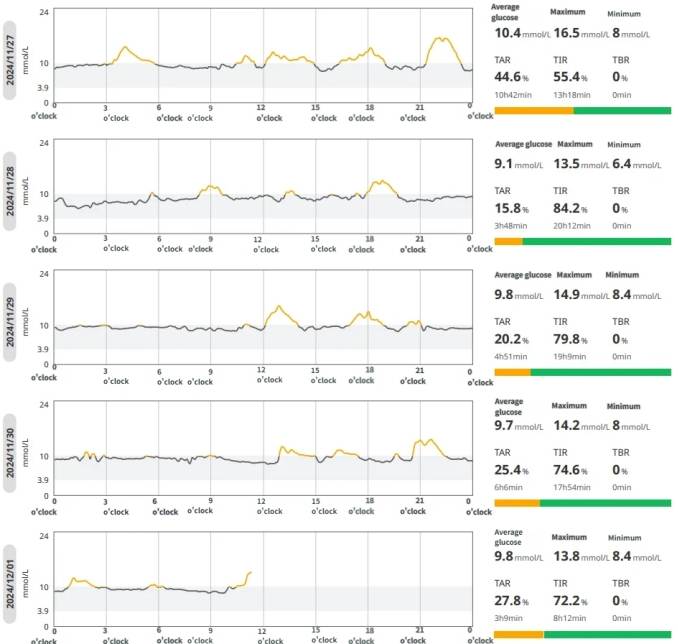
From the daily blood glucose fluctuation, the patient had poor eating habits: irregular meal times, variable number of meals per day, arbitrary eating, and significant differences in the "quality" and "quantity" of food. The patient did not record specific dietary details, and the monitoring report was conducted a long time before admission, so the patient could not recall the situation at that time. It was temporarily impossible to determine which foods caused the blood glucose elevation. With such irregular diet, the medication regimen could not achieve the desired effect. After admission, emphasis should be placed on dietary requirements, the patient's diet should be supervised, and the patient should be urged to exercise appropriately after meals.
2.Program Design
The patient's poor blood glucose control was closely related to lifestyle, especially irregular diet.
|
Daily Glucose Monitoring and Behavior Records |
Important Diet Photos |
Clinical Disposals |
|
|
Dinner: Night time Snack: |
|
|
|
Lunch: Dinner: |
Patient's self-administered medications: Dapagliflozin 10mg at night Metformin 0.5g at night Acarbose 50mg with dinner
|
|
|
Lunch: Dinner: |
OGTT + C-Peptide Release Test completed today. Hypoglycemic regimen: Empagliflozin 10mg once daily Metformin 0.5g twice daily Acarbose Tablets 50mg three times daily
|
|
|
00:38 Snack: Breakfast: Dinner: |
Empagliflozin 10mg once daily Metformin 0.5g twice daily Acarbose Tablets 50mg three times daily
|
|
|
02:05Snack: Breakfast: Lunch: Dinner: |
Empagliflozin 10mg once daily Metformin 0.5g twice daily Acarbose Tablets 50mg three times daily |
|
|
01:03Snack: Breakfast: Dinner: 23:37Snack: |
Empagliflozin 10mg once daily Metformin 0.5g twice daily Acarbose Tablets 50mg three times daily |
|
|
Breakfast: Lunch: Dinner: |
Empagliflozin 10mg once daily Metformin 0.5g twice daily Acarbose Tablets 50mg three times daily |
|
|
00:17Snack Lunch: Dinner: |
Empagliflozin 10mg once daily Metformin 0.5g twice daily Acarbose Tablets 50mg three times daily |
|
|
00:32Snack: Lunch: Dinner: |
Empagliflozin 10mg once daily Metformin 0.5g twice daily Acarbose Tablets 50mg three times daily |
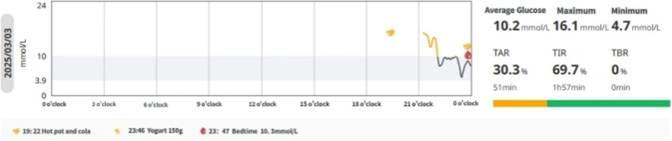


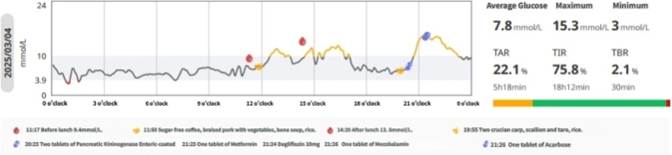


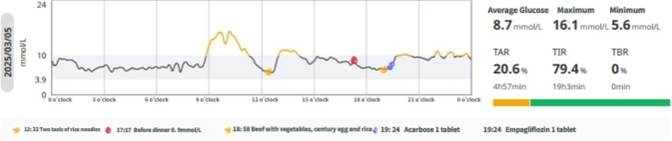


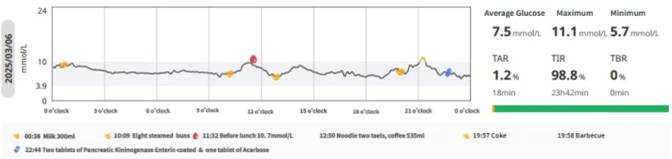


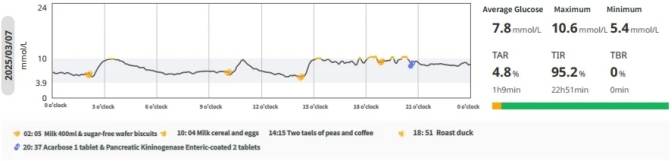


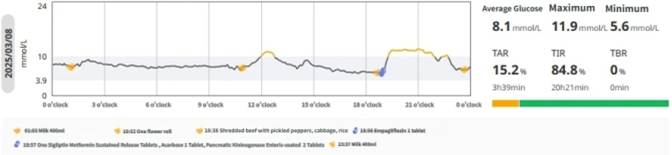


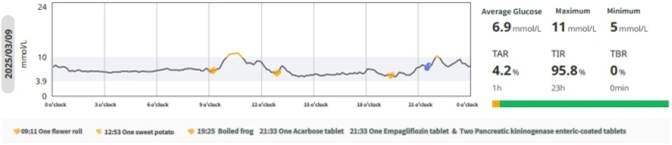


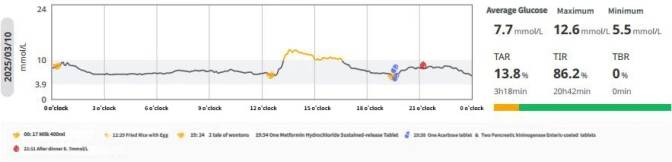




Note: TIR: Time when blood glucose is within the target range (3.9~10.0 mmol/L); TAR: Time when blood glucose is above the target range (>10.0 mmol/L); TBR: Time when blood glucose is below the target range (<3.9 mmol/L)
- Overall Supervision of Patient's Diet to Improve Lifestyle
During the CGM monitoring during this hospitalization, through detailed dietary records, it was found that the patient's eating habits did not comply with diabetic dietary requirements (irregular meal times, high GI and high GL food choices). The patient was communicated with to adjust the diet, and the importance of diet was repeatedly emphasized. The patient was taught to check the impact of different diets on blood glucose in the CGM data management software (APP), and guided to improve the dietary plan.
- Identification of Incorrect Medication Habits and Strengthening Medication Standardization
On days 1-4 after admission, the patient had irregular medication use: missed doses and delayed doses of hypoglycemic drugs were common. CGM indicated high MG value (TAR 20.6%-30.3%), and hypoglycemia occurred in the early morning of day 3 (TBR 2.1%). Before standardized use of hypoglycemic drugs, the patient's blood glucose fluctuated greatly and was not well controlled. The hypoglycemic principles of these drugs were briefly introduced, the importance of standardized medication was repeatedly educated to the patient, and the correct administration methods and precautions of the three hypoglycemic drugs were re-emphasized.
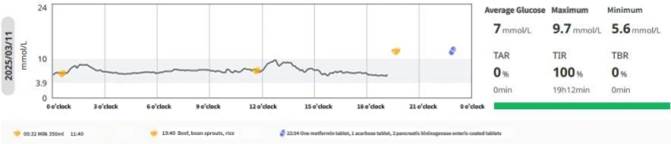
Starting from day 5 after admission, standardized hypoglycemic medication was administered: "Empagliflozin 10mg once daily, Metformin 0.5g twice daily, Acarbose Tablets 50mg three times daily". CGM indicated that the TIR value was significantly higher than that in the first 4 days after admission, the MG value decreased stably, and no hypoglycemia was observed (TBR 0%). On March 11, the TIR value reached 100%. With improved diabetic dietary control and standardized medication, the patient's blood glucose control was significantly improved.
- Analysis and Evaluation of Continuous Glucose Monitoring During Hospitalization at Discharge
- Core Indicators of Continuous Glucose Monitoring During Hospitalization:
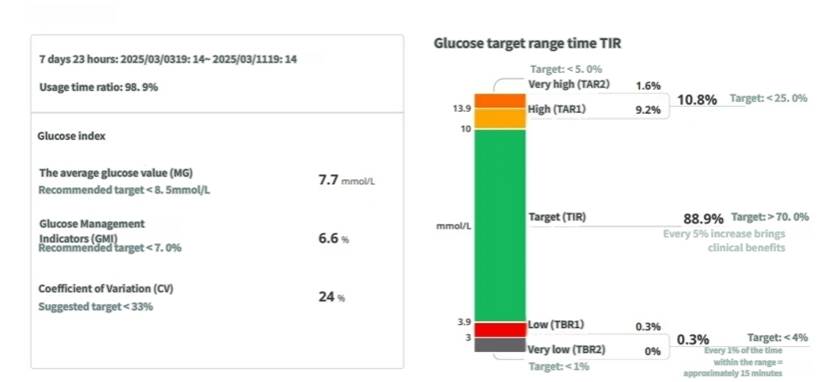
The report showed that the monitoring time accounted for 98.9%, with good data adequacy. The patient's mean glucose value, glucose management indicator, and coefficient of variation all met the standards. The TIR value reached 88.9%, which was significantly higher than the TIR value 3 months before admission (68.3%). The monitoring found that the proportion of low blood glucose was 0.3%. Blood glucose control was significantly improved compared with that before admission, but there was an episode of hypoglycemia.
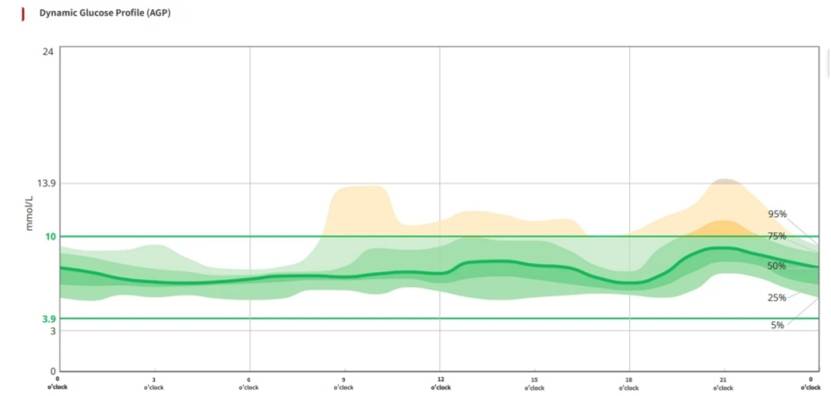
- Analysis of AGP Chart During Hospitalization:
The median line and IQR of the AGP chart were within the target range. The IVR exceeded the target range due to factors such as oral glucose tolerance test, consumption of high GI foods for dinner, and nighttime snacks. Compared with the AGP chart before admission, overall, after adjusting the lifestyle and standardizing the patient's medication habits, the patient's blood glucose control was significantly improved while continuing the previous medication regimen.
3. Effect Confirmation
After discharge on March 10, 2025, the patient continued to wear CGM for blood glucose monitoring, and was required to record important diets to further confirm the effectiveness of the hypoglycemic regimen.
- Core Parameters of Out-of-Hospital Continuous Glucose Monitoring
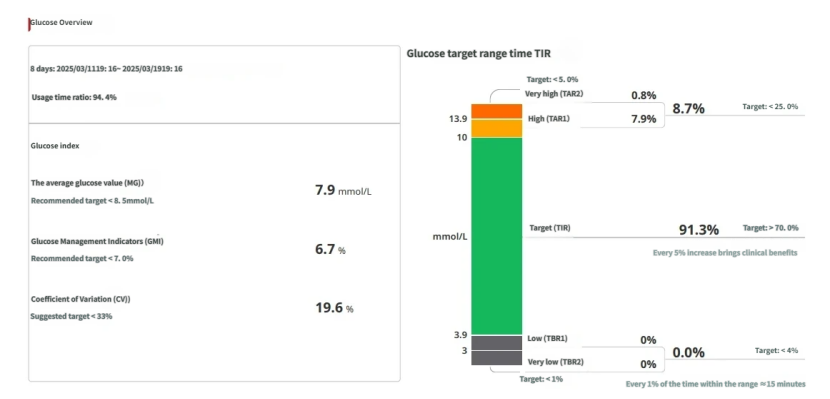
The report showed that the monitoring time accounted for 94.4%, with good data adequacy. All three glucose indicators met the standards. The TIR value (91.3%) was further higher than that during hospitalization (88.9%), and TBR decreased to 0%. Blood glucose control remained ideal after discharge.
- Analysis of Out-of-Hospital Monitoring AGP Chart
After discharge, the median line of the patient's AGP chart was further reduced, but the IQR fluctuation was larger than that during hospitalization. The IVR even had an obvious peak in the morning, and many parts of the IVR exceeded the target range. This indicated that the patient's dietary management was occasionally relaxed after discharge, but the overall blood glucose status was still good.
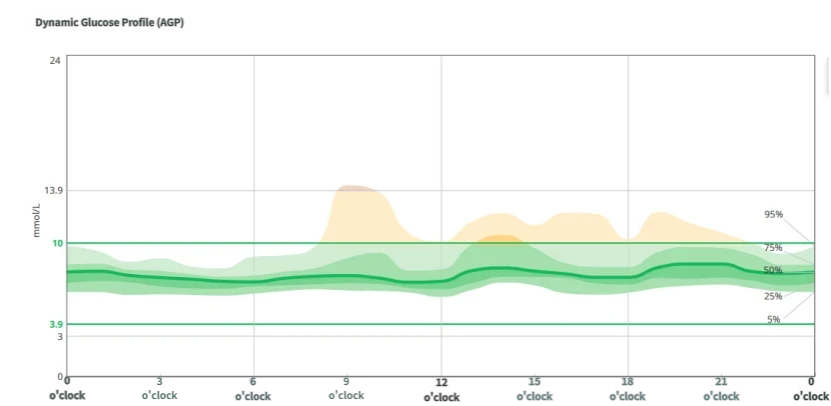
- Analysis of Daily Glucose Fluctuation Out of Hospital
After discharge, CGM indicated that TIR continued to meet the standard, but abnormal peaks appeared. Reviewing the daily glucose fluctuation, the elevated values were related to the patient's diet. No hypoglycemia occurred during the 8-day monitoring period after discharge, and blood glucose control was ideal.
|
Daily Glucose Monitoring and Behavior Records |
Important Diet Photos |
Clinical Disposals |
|
|
|
Empagliflozin 10mg once daily Metformin 0.5g twice daily Acarbose Tablets 50mg three times daily |
|
|
|
|
|
|
Lunch: |
|
|
|
|
|
|
|
Breakfast: |
|
|
|
|
|
|
|
|
|
|
|
|
|
|
|
|
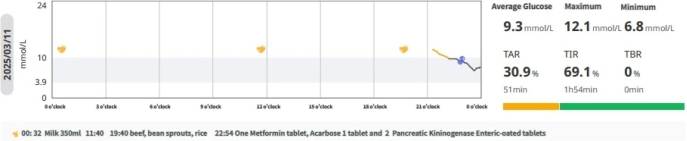
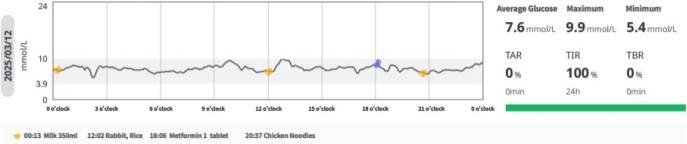
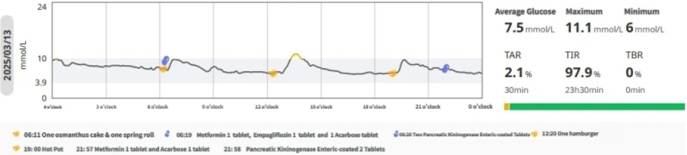

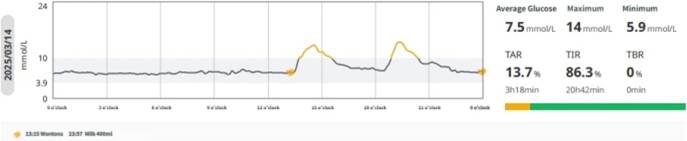
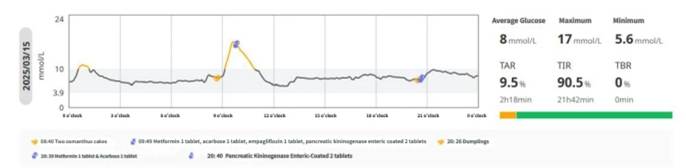





Note: TIR: Time when blood glucose is within the target range (3.9~10.0 mmol/L); TAR: Time when blood glucose is above the target range (>10.0 mmol/L); TBR: Time when blood glucose is below the target range (<3.9 mmol/L)
After discharge, occasional relaxation in dietary management aside, blood glucose control remained good and the current regimen is effective. Strengthen follow-up, communication and patient adherence.
Case Summary
- Application of Three-stage CGM (AGP Decision-Making Cycle)
A 43-year-old female with 4-year diabetes history had elevated blood glucose 3 months pre-admission due to irregular medication and dietary changes. She wore a CGM device during this period, and the report showed persistently high glucose with marked fluctuations, closely linked to her diet. During hospitalization, treatment efficacy was evaluated via daily glucose data, focusing on lifestyle optimization. Dietary adjustments improved glucose control, so the original hypoglycemic regimen was maintained. Post-discharge CGM confirmed regimen efficacy and identified relaxed dietary control, guiding subsequent management.
This case adopted multi-phase CGM, aligning with the AGP cycle ("Problem Identification - Plan Formulation - Efficacy Verification") in the 2023 Edition of the Expert Consensus on Clinical Application of Ambulatory Glucose Profile Reports. The hypoglycemic target was achieved via standardized medication and dietary control based on the original regimen.
- Refined Management Facilitates Problem Identification and Resolution
Most CGM-compatible apps support life-event recording, aiding refined management. During hospitalization CGM, the attending physician instructed her to record detailed daily meals and medication. This revealed irregular meal times, overly late dinners, midnight snacks, irregular medication, and transient hypoglycemia at admission—details undetectable by conventional inpatient care.
Targeted refined management rapidly stabilized her glucose. Real-time glucose fluctuations displayed on the app let her directly observe sharp rises after high-GI foods, enhancing her awareness of diet’s role in glucose control.
- CGM Provides an Objective Basis for Formulating Individualized Treatment
CGM detects glucose fluctuation "blind spots" missed by multiple daily fingerstick tests. Combined with advanced event-recording functions of CGM apps, it enables clinicians to accurately identify problems and develop personalized plans. In this case, CGM and event records pinpointed core issues: irregular medication and poor dietary control. Glucose improved after addressing these, avoiding excessive adjustment of hypoglycemic regimens and supporting long-term efficacy maintenance.
References:
[1] Chinese Society of Endocrinology, National Innovation Center for High-performance Medical Devices. Expert Consensus on Clinical Application of Ambulatory Glucose Profile Reports (2023 Edition). Chinese Journal of Diabetes, 2024, 16(02):190-201.
[2] Expert Group of 2024 Expert Consensus on Clinical Application of Continuous Glucose Monitoring. 2024 Expert Consensus on Clinical Application of Continuous Glucose Monitoring. International Journal of Endocrinology and Metabolism, 2024, 44(06):430-445. DOI:10.3760/cma.j.cn121383-20240911-00124