
From Hyperglycemic Ketoacidosis to Stable Blood Glucose: A New Breakthrough in CGM-Driven Management Mode for Complex Diabetic Complications
Medical History and Basic Information
Chief Complaint: A 48-year-old male patient was admitted due to "elevated blood glucose detected for 10 years and poor blood glucose control for 1 week."
Present History: The patient was found to have significantly elevated blood glucose during a physical examination 10 years ago and was diagnosed with type 2 diabetes mellitus. He did not pay attention to it and did not receive further diagnosis and treatment. Five years ago, he underwent coronary stent implantation for coronary heart disease and began to use insulin glargine and hypoglycemic drugs (specific details unknown). During this period, the patient changed hypoglycemic regimens multiple times. The recent hypoglycemic regimen was "metformin sustained-release tablets 0.5g qn, miglitol 1 tablet tid, insulin glargine injection 26U subcutaneous injection before bedtime." He did not monitor blood glucose regularly on a daily basis. Ten days ago, he underwent coronary artery bypass grafting (CABG) in the Department of Cardiac Surgery due to coronary artery stenosis. After the operation, his food intake was poor. After discharge, he only received metformin sustained-release tablets 0.5g bid for hypoglycemic treatment, and the random blood glucose was 17.7 mmol/L. He occasionally had limb numbness without obvious visual impairment. Today, he was admitted to the hospital as an outpatient with "type 2 diabetes mellitus" for further stable blood glucose control.
Past History: Hypertension for 10 years; 5 years after percutaneous coronary intervention (PCI) for coronary heart disease; coronary artery bypass grafting performed 1 week ago, with paroxysmal atrial fibrillation after the operation.
Physical Examination: Body Mass Index (BMI) 22.3 kg/m²; clear consciousness, poor mental state; no eyelid edema, no lip deformity or cyanosis; tongue protrudes in the middle; thyroid gland not enlarged, no vascular murmur heard. The chest was wrapped with hard dressings; cardiopulmonary examination not performed. No tenderness in the sternum. Heart rate 92 beats/min, regular rhythm; abdomen soft, no tenderness; no edema of both lower extremities.
Auxiliary Examinations: Random blood glucose 17.7 mmol/L; glycated hemoglobin (HbA1c) 10.6%; urine routine (urinalysis): urine ketone bodies 2+, urine occult blood 2+, urine glucose 4+, urobilinogen 1+. Pancreatic islet function:
|
Time |
Insulin (pmol/L) |
C-Peptide (nmol/L) |
Blood Glucose (mmol/L) |
|
0h |
94.3 |
0.99 |
10.87 |
|
1h |
208 |
1.48 |
18.89 |
|
2h |
154 |
1.77 |
22.79 |
|
3h |
176 |
2.2 |
22.14 |
Chest CT plain scan (64/128-slice CT): bilateral pneumonia, partial atelectasis of both lower lobes; tiny nodules in the right lung, follow-up review recommended; local thickening of bilateral pleura; small amount of bilateral pleural effusion; status post aortic-coronary artery bypass grafting + left atrial appendage clipping, status post coronary stent implantation; carotid artery color Doppler ultrasound: carotid atherosclerosis with stenosis.
Diagnosis: 1. Type 2 diabetes mellitus, diabetic ketoacidosis, diabetic peripheral angiopathy; 2. Coronary atherosclerotic heart disease, unstable angina pectoris, cardiac function class III (NYHA classification), status post coronary stent implantation, status post coronary artery bypass grafting; 3. Paroxysmal atrial fibrillation; 4. Hypertension grade 1 (very high risk); 5. Pleural effusion; 6. Pneumonia; 7. Gallbladder stones.
Treatment Regimen Based on CGM Interpretation
The patient had a 10-year course of diabetes mellitus with poor treatment compliance. He did not receive treatment within 5 years after the onset. Five years ago, he began insulin combined with hypoglycemic drug treatment, during which he changed hypoglycemic drugs multiple times. He rarely monitored blood glucose on a daily basis and was unwilling to cooperate with multiple blood glucose monitoring. He was complicated with severe coronary heart disease and had undergone coronary stent implantation. He was admitted to the hospital due to poor blood glucose control and urine ketone bodies after coronary artery bypass grafting.
The patient had poor cardiac condition, was post-coronary artery bypass grafting, complicated with ketoacidosis, poor food intake, and mental anxiety. It was necessary to actively stabilize blood glucose, and multiple blood glucose monitoring was essential. After admission, insulin treatment was preferred, and continuous insulin pump treatment was given. During the treatment, attention should be paid to comforting the patient's mood and reducing pain and mental stimulation. Therefore, the patient was fitted with continuous glucose monitoring (CGM) to achieve good blood glucose monitoring and promote the patient's better cooperation with treatment.
|
Time |
Hypoglycemic Regimen |
Blood Glucose Profile |
Mean Blood Glucose (mmol/L) |
Time in Range (TIR, %)
|
Time Above Range (TAR, %) |
Time Below Range (TBR, %) |
|
October 27 |
Continuous insulin pump therapy: basal dose 7.9U + bolus dose 2U tid |
|
13.6 |
0.0% |
100.0% |
0.0% |
|
October 28 |
Continuous insulin pump therapy: basal dose 10.3U + bolus dose 3U tid |
|
13.6 |
1.2% |
98.8% |
0.0% |
|
October 29 |
Continuous insulin pump therapy: basal dose 15.1U + bolus dose 4U tid |
|
13.1 |
1.2% |
98.8% |
0.0% |
|
October 30 |
Continuous insulin pump therapy: basal dose 18.5U + bolus dose 6U in the morning, 6U at noon, 4U in the evening |
|
11.7 |
27.9% |
72.1% |
0.0% |
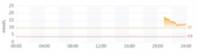
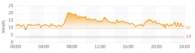
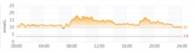
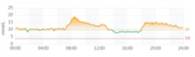
In the first 4 days of treatment, according to the CGM monitoring graph, the blood glucose level was continuously high, and the insulin pump dose was adjusted rapidly. Note: TIR: Time in target blood glucose range (3.9~10.0 mmol/L); TAR: Time above target blood glucose range (>10.0 mmol/L); TBR: Time below target blood glucose range (<3.9 mmol/L)
l Days 1-4 of treatment: Continuous insulin pump therapy was administered. Blood glucose was persistently high, accompanied by ketoacidosis and poor food intake. Ketone bodies were eliminated, and the insulin pump dose was adjusted rapidly according to CGM monitoring results.
|
Time |
Hypoglycemic Regimen |
Blood Glucose Profile |
Mean Blood Glucose (mmol/L) |
Time in Range (TIR, %) |
Time Above Range (TAR, %) |
Time Below Range (TBR, %) |
|
October 31 |
Continuous insulin pump therapy: basal dose 20.5U + bolus dose (6U in the morning, 6U at noon, 4U in the evening) |
|
10.5 |
37.7% |
62.3% |
0.0% |
|
November 1 |
Continuous insulin pump therapy: basal dose 21.3U + bolus dose (6U in the morning, 6U at noon, 4U in the evening) |
|
10.7 |
58.3% |
41.7% |
0.0% |
|
November 2 |
Continuous insulin pump therapy: basal dose 23.1U + bolus dose (6U in the morning, 6U at noon, 5U in the evening) + acarbose 50mg tid |
|
10.2 |
46.0% |
54.0% |
0.0% |
|
November 3 |
Discontinue insulin pump; degludec liraglutide 23U + acarbose 50mg tid |
|
8.6 |
92.1% |
7.9% |
0.0% |
|
November 4
|
Degludec liraglutide 23U + acarbose 50mg tid |
|
7.8 |
95.9% |
4.1% |
0.0% |
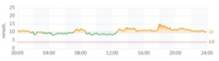
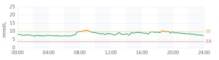
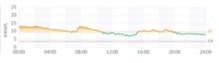
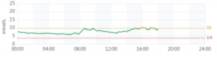
According to the CGM monitoring results, the insulin pump dose was finely adjusted, and acarbose was added in a timely manner to improve blood glucose. Note: TIR: Time in target blood glucose range (3.9~10.0 mmol/L); TAR: Time above target blood glucose range (>10.0 mmol/L); TBR: Time below target blood glucose range (<3.9 mmol/L)
l Days 5-8 of treatment: The patient's general condition improved, and food intake increased. According to the CGM results, the insulin pump dose was finely adjusted with a small adjustment range. At the same time, reasonable diet was guided based on the results, and acarbose was added to improve the patient's postprandial blood glucose. The patient's blood glucose tended to be stable. Before discharge, the insulin pump was discontinued, and the simplified treatment regimen of degludec liraglutide was adopted. The blood glucose control was stable and up to standard, and the patient was very satisfied.
Case Summary
The patient had a long course of diabetes mellitus with multiple complications. After coronary artery bypass grafting, he had psychological anxiety, poor food intake, and ketoacidosis. He rarely monitored blood glucose on a daily basis. During this hospitalization, due to the above conditions such as ketoacidosis, frequent monitoring of blood glucose at multiple points was urgently needed to quickly stabilize blood glucose, promote the recovery of the patient's food intake, and reduce psychological, various pain and stress stimuli. The application of CGM has greatly met the patient's needs for reducing pain, monitoring blood glucose at multiple points, and finely adjusting blood glucose. For both doctors and patients, CGM monitoring is particularly important for patients with complex complications such as poor food intake, poor cardiac function, and ketoacidosis.