
ATTD - ASIA 2025: From Policy Empowerment to Intelligent Systems——Asian Practices in Multi-scenario Applications of CGM!
ATTD - ASIA 2025: From Policy Empowerment to Intelligent Systems——Asian Practices in Multi-scenario Applications of CGM!
The 2nd Asian Conference on Innovative Therapies for Diabetes Management (ATTD - ASIA 2025 ) was grandly held in Singapore from December 9 to 11, 2025. As a highly influential international academic conference in the field of diabetes, the conference focused on technologies for diabetes treatment and management, gathering together clinical and research experts to jointly explore optimized pathways for diabetes prevention and healthcare in Asia.
Against the backdrop of increasingly severe diabetes prevention and control challenges, continuous glucose monitoring (CGM) and in-hospital blood glucose management systems are becoming the core driving force for changing clinical practices. At the conference, experts from China, Russia, and other countries systematically shared the latest applications and practical experiences of CGM in various scenarios, focusing on children and adolescents, hospitalized patients, and other special populations. This article summarizes the key points of the conference for readers.
Policy Empowerment × Technological Innovation:
CGM Management Practices for Russian Children and Adolescents
As one of the countries with a high burden of type 1 diabetes mellitus(T1DM), Russia's exploration in pediatric and adolescent glycemic management holds significant reference value. Professor Evgenia G. Mikhailova, Director of the Endocrinology Department at N.N. Ivanova Children's Clinical Hospital in the Samara region, provided a detailed presentation at the conference on the current prevalence of childhood and adolescent diabetes in the Samara region of Russia and the application of CGM.
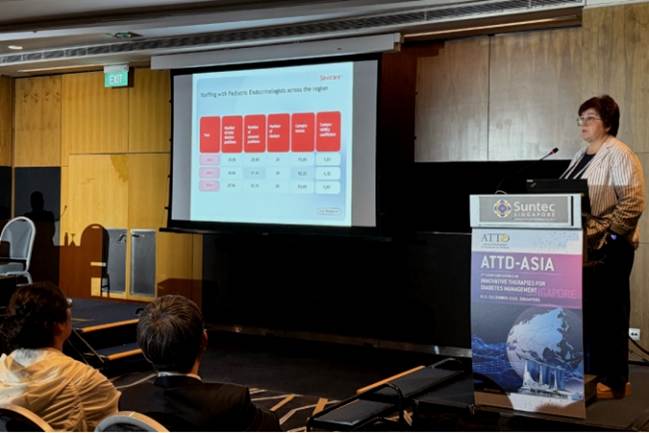
Professor Evgenia G. Mikhailova
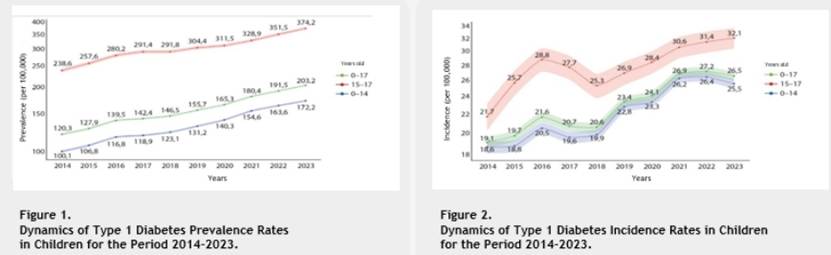
Figure. Prevalence of T1DM among children and adolescents in Russia from 2014 to 2023 (Source: Speaker's PPT)
Data [1] indicate that the incidence and prevalence of T1DM among children and adolescents in Russia have been continuously increasing from 2014 to 2023.In response to this situation, Russia achieved widespread adoption of CGM through policy innovation: Starting in 2022, the Samara region took the lead in revising the preferential drug supply clauses in the national healthcare insurance program, incorporating CGM into the coverage for children with diabetes and pregnant women; by the end of 2023, the "Fight Against Diabetes" project was launched, providing CGM free of charge to all pediatric and adolescent patients in Russia.
Driven by relevant policies, Russia's demand for CGM has surged significantly. Procurement volumes reached approximately 1.5 million units in 2024, 90% of which were allocated to pediatric applications. Notably, Russia's procurement preferences for CGM have undergone substantial changes over the past three years. From 2023 to 2025, the Chinese brand — Sinocare — successfully ranked among the top performers in the Russian market, achieving the second-highest procurement share.
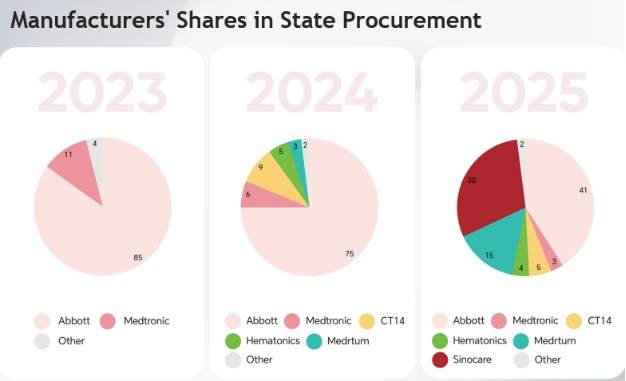
Figure. Manufacturers' Shares in Russia’s State Procurement(Source: Speaker's PPT)
Professor Evgenia G. Mikhailova emphasized that glycemic management in children and adolescents is a systematic task, and relying solely on CGM and training for patients and their parents is insufficient.In addition to standardized usage of CGM, timely intervention for blood glucose fluctuations and adjustment of insulin therapy dosage are critically important. Sinocare’s iCan blood glucose management system can synchronize data detected by the CGM sensor to the mobile APP on the patient's or caregiver's phone, and deeply integrate with the remote monitoring program of pediatric endocrinologists, forming a multi-party collaborative management model of "patient- medical staff - CGM".The Samara region has successfully implemented remote monitoring and regular follow-up of the Pediatric Endocrinology Center using this system, achieving closed-loop management of sensor utilization, data interpretation, and treatment plan adjustments.
The clinical data also confirmed the remarkable efficacy of policy innovation and advanced blood glucose management systems. According to data from the Russian Federal Diabetes Register, the average glycated hemoglobin level in the Samara Region is 7.8%, with the emergency hospitalization rate for diabetic ketoacidosis (DKA) reduced more than threefold, and no cases of severe hypoglycemia requiring hospitalization reported.Furthermore, the CGM usage rate reached 100% among local children under 4 years old and 95% among those over 4 years old, with a significant reduction in the number of late-stage diabetic complications.
From achieving ideal glycemic levels to a significant reduction in hospitalization rates, and ultimately to zero hospitalizations for severe hypoglycemia, the practices in the Samara region have fully demonstrated that CGM is not only a "valuable assistant" for glycemic monitoring in pediatric diabetes patients, but also a "critical tool" for improving management quality and reducing the risk of complications. Policy support has further accelerated the widespread adoption of CGM and the continuous optimization of management models, benefiting more children and adolescents with diabetes and enabling them to enjoy a more secure and high-quality growth period.
Value Upgrade of CGM Under Multi-Scenario Verification
Data from the 11th edition of the IDF Diabetes Atlas 2025 [2] indicates that the total number of diabetes patients in China is approximately 148 million, and among people aged 20-79, deaths related to diabetes account for as high as 10.6%. Faced with the current situation of high prevalence, low awareness rate, low treatment rate, and low control rate, diabetes management in China is facing enormous challenges.
Compared with capillary blood glucose monitoring and glycated hemoglobin(HbA1c) , CGM provide comprehensive "point-line-surface" data. It can not only capture real-time blood glucose data but also fully reflect the characteristics of blood glucose fluctuations, and accurately detect asymptomatic hypoglycemia and nocturnal hyperglycemia.
Professor Qiuhe Ji from Xi'an International Medical Center Hospital systematically sorted out the clinical application value of CGM in his conference report, and pointed out that CGM has evolved from a simple monitoring tool to a decision-making center for blood glucose management. By connecting patients, medical staff and intelligent devices, it has realized "full-cycle management" from prevention, diagnosis, treatment to rehabilitation. Through multi-scenario application cases, Professor Qiuhe Ji fully demonstrated the continuous upgrading and wide adaptability of CGM technology.
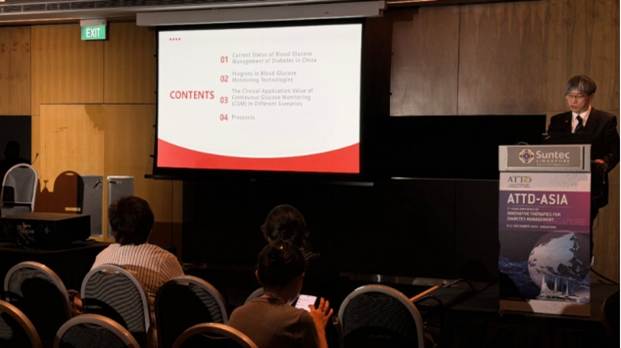
Professor Qiuhe Ji
Ø Clinical Application Efficacy of CGM in Multiple Scenarios
l For general inpatients, CGM significantly increased the target range time (TIR, 3.9-10.0 mmol/L) of blood glucose by 8.2% compared to traditional point-of-care testing (POCT), reduced the time to glycemic target attainment from 4 days to 2 days, and did not increase the risk of hypoglycemia [3].
l In intensive care unit (ICU) patients: The use of CGM in the ICU significantly improves the TIR (from 46.0% to 64.5%) and reduces mean blood glucose [4] (11.1 vs. 10.2 mmol/L). Additionally, it markedly decreases the risks of hypoglycemia and nosocomial infections (by 67% and 79%, respectively) and lowers mortality (by 46%) [5], providing a safe and effective solution for glycemic management in ICU patients.
l Perioperative patients: Compared with insulin pump therapy alone, CGM combined with insulin pump therapy can significantly shorten the preoperative waiting time and postoperative hospital stay, and effectively reduce the total hospitalization cost (62,811.7 yuan vs. 33,656.3 yuan) [6].
l Special populations: CGM can effectively improve glycemic control in pregnant women with T1DM, significantly reducing daytime blood glucose levels at 24 weeks of gestation and decreasing fetal exposure to maternal hyperglycemia, thereby lowering the risk of macrosomia [7]. Additionally, CGM facilitates long-term glycemic management and complication prevention in children. After CGM implementation, the risk of hospitalization for cardiovascular complications in children is markedly reduced, with a 75% decrease in hospitalization for heart failure, a 79% decrease in peripheral vascular disease, a 41% decrease in atrial fibrillation, and a 36% decrease in acute myocardial infarction [8].
Ø AI + CGM: Moving towards A New Era of Precise Prevention and Control
With the rapid advancement of artificial intelligence (AI) technology, the deep integration of CGM and AI will become the core direction for next-generation diabetes management. Current challenges faced by CGM, such as complex data interpretation and significant individual variability, are expected to be addressed one by one through AI technology. AI algorithms can process high-frequency CGM data to achieve personalized glycemic prediction and early warning; support automated insulin delivery (AID) systems to simulate physiological glucose regulation; in prediabetes management, the 24-hour glucose "fingerprint" captured by CGM combined with AI deep learning can identify high-risk populations in advance and generate personalized intervention plans for diet, exercise, and medication, thereby shifting diabetes management from "passive treatment" to "active prevention."
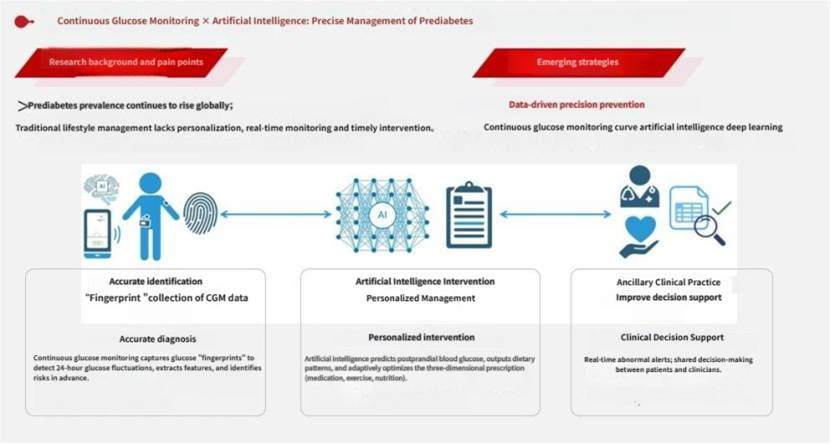
Figure. Integration of CGM and AI (Source: Speaker's PPT)
Joint Efforts of the Whole Hospital—
Intelligent System Solves the Problem of Inpatient Blood Glucose Management
According to statistical data [9-11], 70% of inpatients with hyperglycemia are distributed in non-endocrine departments, and the incidence of hypoglycemia in patients under the traditional management model is as high as 23.5%. The current situation of in-hospital blood glucose control urgently needs improvement. The hospital-wide blood glucose management model shared by Professor Lilin Gong, chief physician of the Department of Endocrinology, the First Affiliated Hospital of Chongqing Medical University, provides a Chinese solution to the problem of hyperglycemia management in non-endocrine departments.
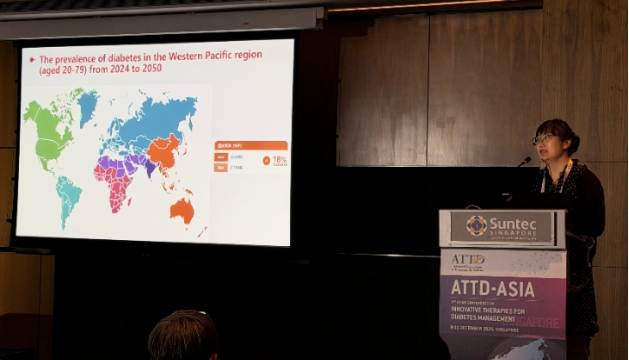
Professor Lilin Gong
The First Affiliated Hospital of Chongqing Medical University has adopted an intelligent management system of "Internet & Active Consultation": through the in-depth integration of hardware devices (such as intelligent blood glucose meters, insulin pumps), CGM with the in-hospital blood glucose management system and the in-hospital information system (HIS), a "virtual ward" has been built, realizing full-coverage management of 8,652 patients in 25 departments.
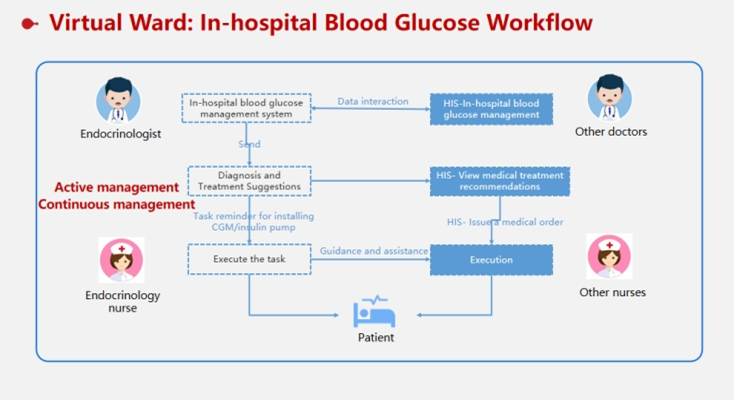
Figure. "Virtual Ward" ——In-hospital Blood Glucose Management Workflow (Source: Speaker's PPT)
This in-hospital blood glucose management system has multiple core advantages: On the one hand, it supports real-time monitoring across multiple terminals. When a patient's blood glucose is abnormal, the system can automatically trigger an active consultation by the endocrinology department to ensure timely intervention; on the other hand, it can include people such as those with long-term blood glucose medical orders, those with significantly abnormal blood glucose, those using CGM, and those receiving insulin pump therapy into the key management category to achieve refined control.
More importantly, the First Affiliated Hospital of Chongqing Medical University has proven through practice that the "virtual ward" in-hospital blood glucose management system has achieved significant clinical benefits:
l With real-time and precise blood glucose intervention, the incidence rate of hyperglycemia in patients can be reduced by 25%, and the incidence rate of hypoglycemia can be reduced by as high as 45%, effectively reducing the risk of acute complications such as ketoacidosis and hypoglycemic coma caused by severe fluctuations in blood glucose.
l The patient's hospital stay has been significantly shortened, and the in-hospital infection rate has dropped sharply. This not only reduces the burden of treatment costs on patients but also improves the turnover efficiency of hospital beds and optimizes the allocation of medical resources. From the two dimensions of patient rehabilitation effects and hospital service efficiency, it has achieved a dual improvement in clinical value and operational benefits.
As a full-coverage and homogenized management model based on internet information systems and proactively managed by the Department of Endocrinology, the "virtual ward" is easy to operate and highly intelligent. It has successfully achieved seamless integration between the Department of Endocrinology and non-endocrinology departments in managing patients' blood glucose, providing valuable practical reference value for in-hospital blood glucose management in large general hospitals.
Make CGM technology accessible to more people,
and write a new chapter in diabetes prevention and control!
The ATTD - ASIA 2025, through solid clinical data and innovative practice models, has demonstrated that the popularization and application of CGM technology is reshaping the landscape of diabetes management. From policy guarantees in Russia to intelligent innovations in China, and from children and adolescents to critically ill patients, CGM, with its comprehensive, accurate, and continuous advantages, is overcoming blood glucose management challenges in different scenarios.
In the future, with the in-depth integration of CGM and AI, the strengthening of policy support, and the continuous accumulation of clinical application experience, blood glucose management will achieve leapfrog development from "passive response" to "active prevention and control", and from "standardized treatment" to "individualized precision management", bringing better-quality and more efficient health management services to diabetic patients worldwide.
References:
[1]Laptev D.N., Bezzlepkina O.V., Sheshko E.L., Alexandrova G.A., Chumakova O.V., Krestovskaya N.M., Kulayev A.Sh., Peterkova V.A. Main epidemiological indicators of type 1 diabetes mellitus in children in the Russian Federation for 2014–2023. Problems of Endocrinology. 2024;70(5):76-83.
[2]IDF Diabetes Atlas 11th Edition.https://diabetesatlas.org/resources/idf-diabetes-atlas-2025.
[3]Wang Y,et al. Lancet Reg Health West Pac. 2024 Jul 21;48:101067.
[4]Chu C, Li J, Yang X, et al. J Crit Care. 2024;84:154894.
[5]Yao Y. et al. Am J Transl Res. 2022 Jul 15;14(7):4757-4767.
[6]Xiao YZ, et al. Chin J Clin Res, 2024.37(7):1029-1034.
[7]Scott, Eleanor M et al. Diabetes care vol. 43,6 (2020): 1178-1184.
[8]EEG-OLOFSSON K, et al. Diabetes Care, 2024, 47(12): 2164-71.
[9]China Expert Consensus on High Blood Glucose Management Targets for Adult Inpatients (2013).
[10]Survey on insulin compliance in urban medical insurance data.
[11]Mebazaa A,et al. J Am Coll Cardiol.2013,61(8):820-9.;5. Kwon S,et al.Ann Surg.2013;257(1):8-14.